CERV calls for NGOs: equality, rights and democracy
What the two CERV calls open until February 2027 pay, which NGOs qualify for each, how proposals are scored, and the small regranting calls a local association can answer without a consortium.
CERV calls for NGOs come from the Citizens, Equality, Rights and Values Programme (CERV), the EU programme for civil society, rights groups, remembrance projects and organisations working against gender-based violence. The European Education and Culture Executive Agency (EACEA) manages the Union values and remembrance calls, and the Commission’s Directorate-General for Justice and Consumers manages the Daphne call. Two 2026 calls are open at this update with a combined estimated budget of €142 million, and both close on 24 February 2027 at 17:00 Brussels time (Union values call, remembrance call).
They serve two very different kinds of NGO. One funds large intermediaries that pass money on to hundreds of small groups. The other funds remembrance projects from €50,000. Here is how to tell which door is yours.
Which CERV calls are open to NGOs right now?
These are the CERV calls Yellow Grant reads from the Funding & Tenders Portal 3 times a day:
The full programme list, with closed calls kept for reference, is on the page of CERV calls.
What does the Union values call for intermediaries fund?
The topic CERV-2026-CITIZENS-VALUES has an estimated budget of €114 million (source). It selects “a limited number of intermediaries” in EU Member States, and each one runs its own grant scheme for local, regional and national civil society organisations. The call asks intermediaries to give priority to grassroots, small, remote and rural based organisations, the groups with the fewest funding sources.
The numbers that shape a proposal:
- Grant size: the EU grant requested cannot be lower than €2.5 million or higher than €6 million.
- Regranting is mandatory. Every project must pass money on, at most €60,000 per third party, and the small grantees must not be asked for co-financing. The call wants them to use simplified cost options, lump sums above all.
- Experience test: the applicant or the consortium needs at least 3 years of recent experience building the capacity of CSOs and proven experience awarding and managing grants to them.
- Funding rate: the agency reimburses actual costs at 94%.
- Independence counts. The first scoring point under Relevance is the applicant’s independence from government, public authorities and political, religious or commercial interests.
The call also expects a written assessment of civic space in each target country, built on a gender analysis. An intermediary without partners in a country has to show it knows that country well enough to run calls and monitor projects there.
What does the European Remembrance call fund?
European Remembrance - 2026 (CERV-2026-CITIZENS-REM) has €28 million over five topics (source). It fits historians’ associations, memorial sites, museums, youth groups and NGOs working on how Europe remembers its past. Projects can be national or transnational.
| Topic | Budget in the call document | Deadline |
|---|---|---|
| Strengthening the remembrance of the Holocaust against Jewish people. | €14 million | 24 February 2027 |
| Fostering remembrance of the legacy of colonialism, slavery, and migration, and their impact on contemporary multicultural European societies. | €5 million | 24 February 2027 |
| Remembering democratic transitions, the (re-)building of democratic institutions, and strengthening society based on the rule of law, democracy, and fundamental rights. | €4 million | 24 February 2027 |
| Strengthening the remembrance of Roma victims | €2.5 million | 24 February 2027 |
| Strengthening the remembrance of LGBTIQ+ victims and other victims | €2.5 million | 24 February 2027 |
Each project asks for €50,000 to €500,000, and at least two applicants apply together: a lead and one co-applicant that is neither an affiliated entity nor an associated partner. The lead must be a non-profit legal entity or an international organisation. For-profit companies can join as co-applicants only next to public or non-profit partners.
The remembrance grant is a lump sum. The call defines it as 1 lump sum = 1 work package = 1 ‘event’: an event is a conference, workshop, exhibition, campaign, survey or similar activity with direct, verifiable participation of the target group. You fill the lump sum budget inside Part A of the application form. The mechanics match those explained in the guide to lump sum funding.
How do the two open CERV calls compare?
| Union values (intermediaries) | European Remembrance | |
|---|---|---|
| Who applies | Intermediaries: non-profit civil society organisations with 3 years of experience in building the capacity of CSOs and in awarding grants to them | Non-profit organisations or international organisations as lead; for-profit co-applicants only next to public or non-profit partners |
| Countries | EU Member States, overseas countries and territories included | EU Member States and countries associated to CERV |
| Minimum partnership | 1 applicant | 2 applicants (lead and at least one co-applicant) |
| Grant per project | €2,500,000 to €6,000,000 | €50,000 to €500,000 |
| Type of grant | Budget-based actual cost grant, funding rate 94% | Lump sum grant: 1 lump sum per work package |
| Project length | 36 to 48 months | 12 to 24 months as a rule |
| Regranting | Mandatory, up to €60,000 per third party | Not part of the call |
| Part B limit | 70 pages | 70 pages |
| Results and signature | Results August 2027, signature November 2027 | Results August 2027, signature August to November 2027 |
All rows come from the two 2026 call documents. Note the country rule: an NGO from a country associated to CERV can join a remembrance project, and the intermediaries call stays closed to it.
How are CERV proposals scored?
Both calls use the same three criteria and thresholds:
- Relevance, 40 points, minimum 25. Fit with the call priorities, a clear needs assessment with a gender perspective, and the link to the EU strategies the call names. Fall below 25 here and the proposal is out, whatever the total.
- Quality, 40 points. A logical frame from problem to solution, a clear workplan with tasks split between partners, risk management, and a project that fits its time frame. For intermediaries this also covers how they reach small rural groups and how they pick grantees without conflicts of interest.
- Impact, 20 points. Long-term effect on the target groups, a dissemination plan, a multiplier effect, and results that last after the EU money stops.
- Pass mark: 70 out of 100. Proposals above both thresholds are funded in score order until the budget runs out. Ties go to the higher Relevance score, then Quality, then Impact.
Relevance carries the weight twice: it is the only criterion with its own minimum, and it breaks ties first. Write that section last, once the rest of the proposal shows exactly what the project changes.
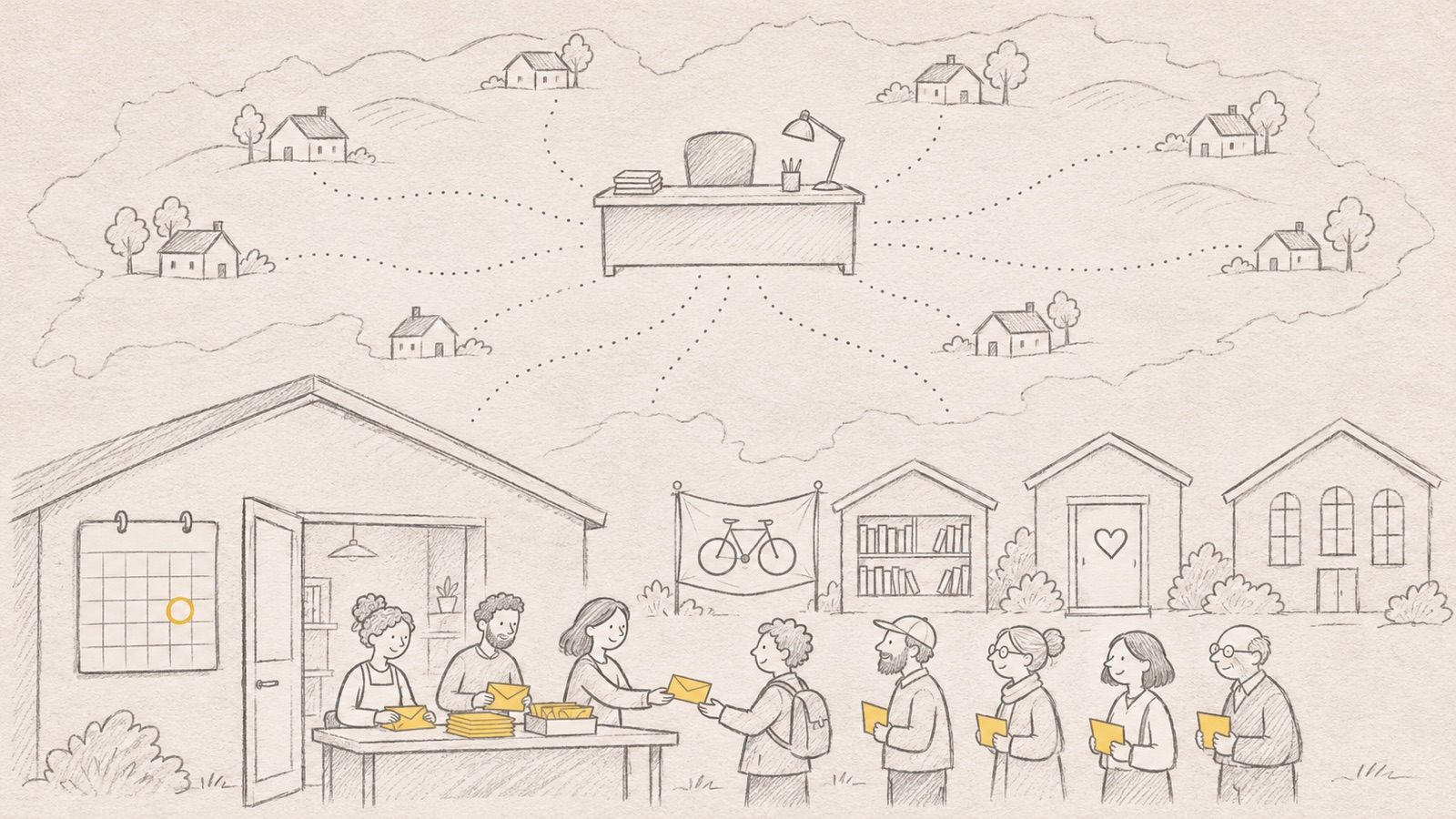
Can a small NGO get CERV money without a consortium?
Yes, through regranting. A small association rarely meets the €2.5 million floor of the intermediaries call, and the remembrance call needs two applicants. Funded CERV projects fill that gap: they run their own open calls, write the rules in plain language and fund single organisations.
At this update 6 of these calls are live, with budgets from €100,000 to €900,000 per call:
- Low threshold - Elérhető (run by CLD): deadline 12 December 2026.
- Call for proposals for large grants No. 4/SPLOT/GD/2026 (run by SPLOT wartosci 2.0): deadline 28 December 2026.
- A running call No. 5 for bilateral cooperation project proposals (run by CERV 2024): deadline 1 February 2027.
- Comprehensive and inclusive support for women and girls' victims of GBV (run by CoPower): deadline 1 March 2027.
- Call for proposal for support to Slovenian and Croatian SCOs to “Go out and vote!” campaigns (run by IMPACT4VALUES 2.0): deadline 1 January 2028.
- ReAction - Rapid Response Grants (run by BIRDS in BG - 2): deadline 31 March 2028.
Each regranting call sets its own eligibility, and many are limited to one country or region. Read the call page before writing anything.
What happened to the 2026 Daphne call?
The Daphne strand funds work against gender-based violence and violence against children. Its 2026 call had €21 million over five priorities and closed in early November 2026 (source). Requested grants ran from €1 million to €2.5 million for the intermediaries priority and €200,000 to €600,000 for the other four, paid as a lump sum at a 90% funding rate. Results are planned for May 2027. Yellow Grant lists the next Daphne call as soon as it appears on the portal, and the regranting calls of funded Daphne projects show up in the list above.
How do you prepare a CERV application?
- Pick the call that matches your size. A national network that already runs small grants fits the intermediaries call; a memorial site or youth NGO with one partner fits remembrance; a village association fits a regranting call.
- Register in the Participant Register to get a PIC, the code that identifies your organisation on the portal, and start the validation early.
- Gather the annexes the call lists. The intermediaries call asks for CVs of the project team, last year’s activity report of every applicant and a list of the main projects from the last 4 years. Any work with children under 18 needs a child protection policy.
- Write to the 70-page limit of Part B. Evaluators ignore extra pages.
- Fill Part C, the indicator form, in full. Both calls make every section mandatory.
- Submit before 17:00 Brussels time on the deadline day. Each call page on Yellow Grant has a calendar file with the exact time.
My take: with €114 million spread over a few grants of up to €6 million, the intermediaries call will fund roughly 20 to 45 organisations across 27 countries. Most NGOs will meet CERV money through those intermediaries in 2028, so watch their calls as closely as the Commission’s.
Keep CERV deadlines on your own site
NGO networks, human rights platforms and city volunteer centres keep lists of open calls that age within weeks. The free deadlines widget shows live CERV calls on any site, filtered by programme or theme, and updates itself 3 times a day.
Open calls right now
Low threshold - Elérhető
Call for proposals for large grants No. 4/SPLOT/GD/2026
A running call No. 5 for bilateral cooperation project proposals
Strengthening the remembrance of Roma victims
Strengthening the remembrance of the Holocaust against Jewish people.
Fostering remembrance of the legacy of colonialism, slavery, and migration, and their impact on contemporary multicultural European societies.
Remembering democratic transitions, the (re-)building of democratic institutions, and strengthening society based on the rule of law, democracy, and fundamental rights.
Strengthening the remembrance of LGBTIQ+ victims and other victims
CERV-2026-CITIZENS-VALUES
Comprehensive and inclusive support for women and girls' victims of GBV
Questions
Which CERV calls are open to NGOs right now?
Two Commission calls take proposals until 24 February 2027 at 17:00 Brussels time: the Union values call for intermediaries (CERV-2026-CITIZENS-VALUES, €114 million) and European Remembrance 2026 (CERV-2026-CITIZENS-REM, €28 million over five topics). Funded CERV projects also run smaller regranting calls with their own deadlines, listed on this page.
How much can an NGO get from a CERV remembrance project?
Between €50,000 and €500,000 per project in the 2026 European Remembrance call. The grant is a lump sum, projects run for 12 to 24 months as a rule, and at least two applicants have to apply together.
Can a small local association apply to CERV?
Yes, through regranting. The Union values call funds intermediaries that pass grants of up to €60,000 to local, regional and national civil society organisations in EU Member States, and those small grants ask for no co-financing. The intermediaries publish their own calls.
Can organisations outside the EU apply?
For the remembrance call, organisations in countries associated to CERV can take part. The Union values call for intermediaries accepts only organisations established in EU Member States, overseas countries and territories included.
What score does a CERV proposal need?
Both 2026 calls score Relevance out of 40 (minimum 25), Quality out of 40 and Impact out of 20, with an overall pass mark of 70 out of 100. Proposals above both thresholds are funded in score order until the budget runs out.